
Carbondale Previous Residents by Era
A Carbondale address has several overlapping histories. The parcel and deed trail identifies title holders. Directories and newspapers can place occupants, businesses, or institutions there. Maps show whether a building or lot existed in a given year, but they rarely name the people inside. Start with the source closest to the target date, then test the name in a different kind of record.
| Source | Documented span | Custodian | Useful evidence |
|---|---|---|---|
| Fidlar land index | 1989 to present | Jackson County Clerk & Recorder | Basic recording data and deed references |
| Deed index and records | Index 1838-1889; records 1843-1936 | IRAD at SIU | Grantor, grantee, legal description, book and page |
| Assessor books | 1861-1970 | IRAD at SIU | Taxed owner, parcel description, and value |
| Directories and newspapers | 1896 and 1905 anchors; news 1993 to today | JCHS, SIU, public library | Residents, institutions, events, and obituaries |
| Sanborn maps | 1886, 1893, 1899, 1906, 1913, 1929 | LOC and UIUC | Street, lot, and building changes |
For a recent transfer, use the current parcel and free land index first. For early property, search IRAD descriptions by names and legal description. The years from 1937 through 1988 form the difficult bridge because the inspected online index starts later and the documented IRAD deed series ends earlier. That span calls for Recorder terminals, county books, JCHS, and SIU reference help. It does not mean the deeds are gone.
Fix the Carbondale Parcel First
Before tracing previous residents, record the current PIN, situs address, legal description, subdivision or lot wording, and parcel shape. The Jackson County GIS viewer exposes those fields along with owner, tax, class, value, and last-sale data. Its public layer separates the site address from owner and mail-to addresses. A tax bill sent elsewhere does not prove where an owner lives.
The legal description is often more durable than a street number. Save its exact wording. Compare the parcel outline with a plat when a boundary seems to shift. A current PIN is a sound starting key, but land divisions and combinations can cause older papers to use a different identifier.
- Situs address
- The physical location assigned to the parcel.
- Mail-to address
- The destination for tax correspondence, which may be elsewhere.
- Legal description
- The land description used in deeds, based on lots, plats, sections, or measurements.
Walk Back Carbondale Deeds
The Jackson County deed chain begins with today's titled owner, not with a guess about a past household. Use the current record to identify the name and legal description, then search the free Fidlar index. County-described coverage begins in 1989. Tapestry adds image and search access for a fee. The Murphysboro office has free public computers and staff help, though staff do not conduct the search.
- Copy the current PIN and full legal description from GIS or the assessor roll.
- Find the current owner's purchase instrument and note grantor, date, document number, book, and page.
- Search that seller as a grantee to find the deed by which the seller acquired the same land.
- Repeat, checking the legal description so a same-name result does not lead to another parcel.
- At the online cutoff, move to Recorder books, public terminals, IRAD, JCHS, or SIU.
- Grantor / grantee
- The party transferring an interest and the party receiving it.
- Chain of title
- The linked sequence of recorded transfers for the same land.
- Book and page
- A stable citation used to retrieve a recorded document.
A known document number or book and page supports an in-person or mailed copy request. The county lists prepaid copies at $1 per page and asks for a stamped, self-addressed envelope. Check live instructions because costs may change.
Carbondale's Missing Middle Years
The sharpest local problem is the gap between archive series and the web portal. IRAD documents a deed index from 1838 through 1889 and deed records from 1843 through 1936. The free Fidlar index starts in 1989. Previous residents tied to transfers from 1937 through 1988 need an offline bridge.
Call the Jackson County Clerk & Recorder at 618-687-7360 before going to 1001 Walnut Street in Murphysboro. Ask what book, film, terminal, or index covers the date. Give staff the parcel description, proved names, and a narrow date range. IRAD is at SIU, while JCHS also holds courthouse and local-history material.
Note: The online gap is an access gap, not evidence that Jackson County stopped recording deeds.
Sanborn Maps Date Carbondale Blocks
Fire-insurance maps act as an address time machine. Carbondale editions exist for 1886, 1893, 1899, 1906, and 1913 at the Library of Congress, with a 1929 edition through UIUC. They show streets, lots, building footprints, construction, and use, but usually do not name a resident.
Open the 1886 Carbondale Sanborn set, use its index and sheet key, then compare the same block in later editions. A building that first appears between two maps narrows the deed and directory years. If a number disappears, compare the lot and block rather than assuming the structure moved.
Early Carbondale Resident Clues
John W. D. Wright's local history includes an appendix titled “Residents of Carbondale in 1896” on page 335. Bibliographic and federal survey references also document a Carbondale City Directory for 1905. Neither item is a complete census or title record. Each supplies names to test against a deed, map, assessor book, newspaper, or cemetery file.
The Jackson County Historical Society genealogy collection brings together early vital indexes, obituaries, cemetery sources, family files, probate material, directories, and courthouse records.
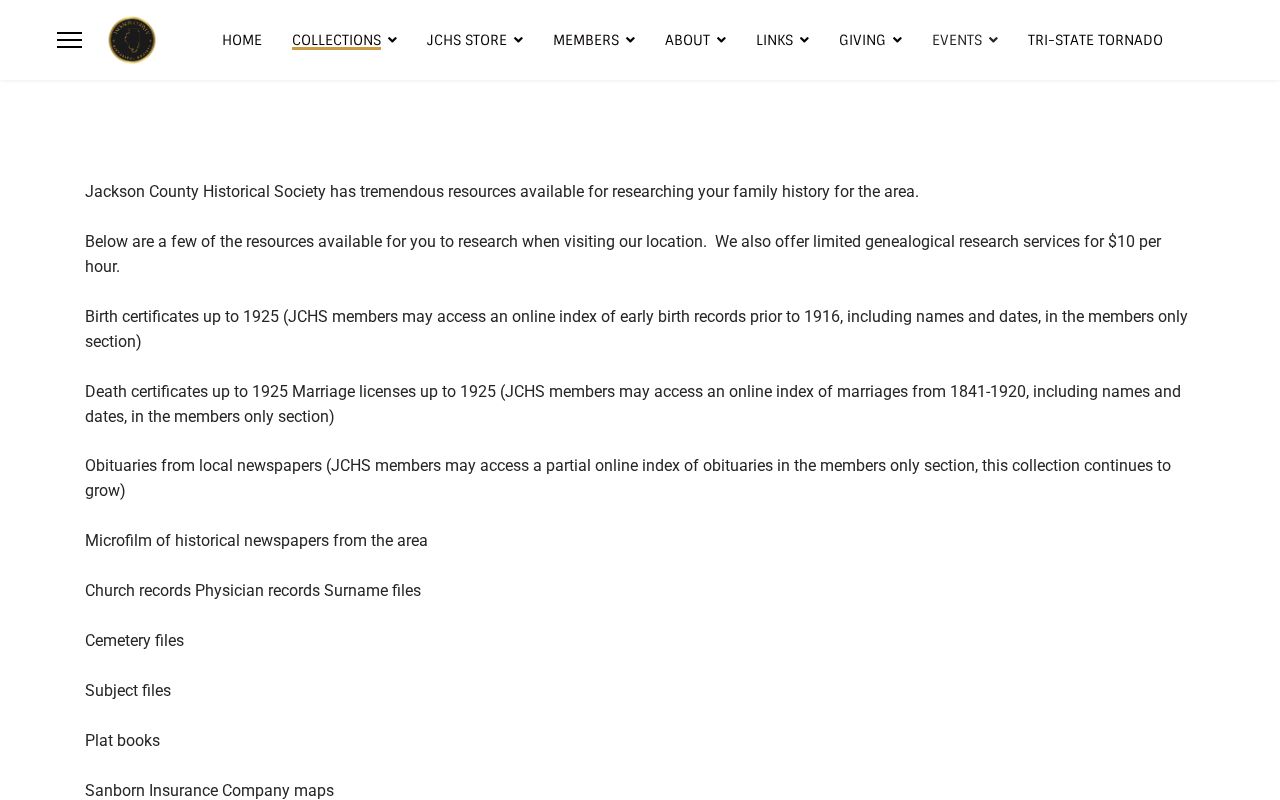
Its collection can connect household, property, and family evidence kept in separate official series.
Order Carbondale Archive Evidence
JCHS provides a clear remote route. Its records order form asks for record type, subject, volume or book, page, delivery, and payment details. It covers locating, pulling, copying, and scanning a small result. Confirm the current base price with the society.
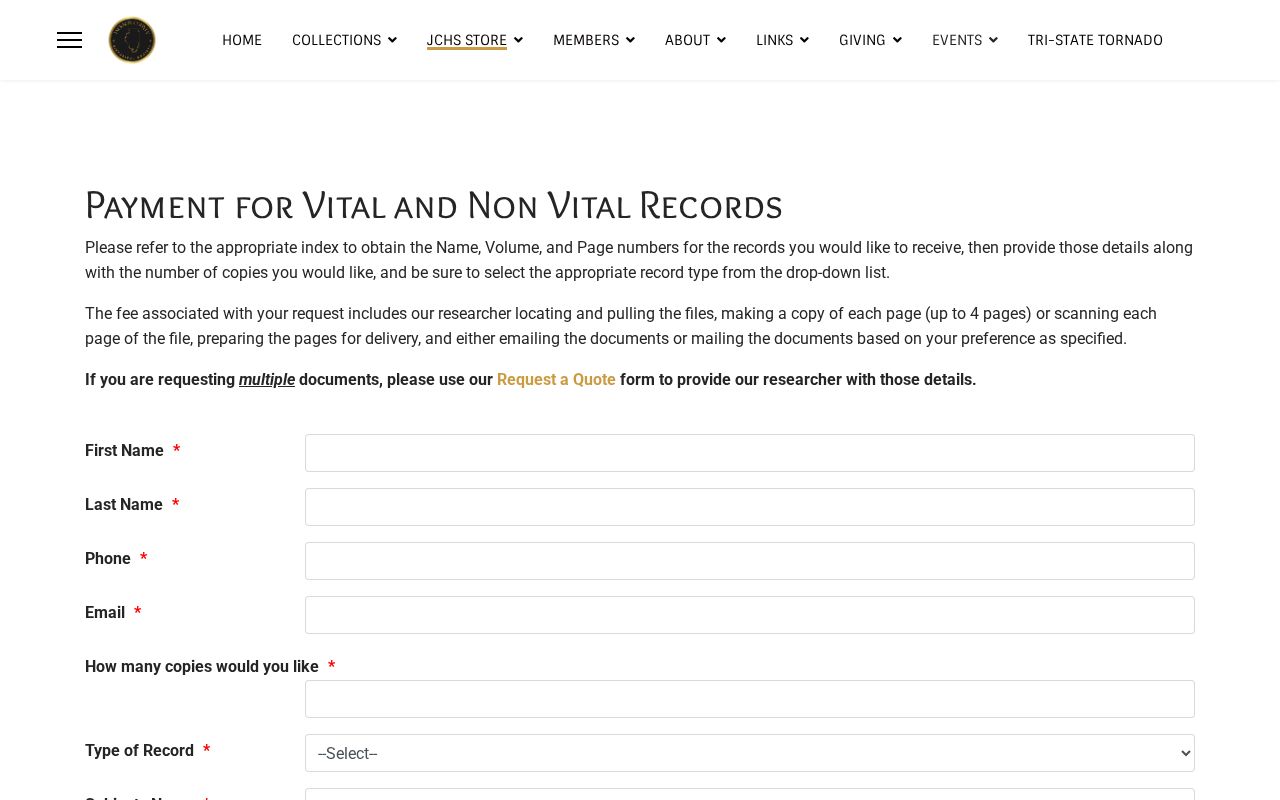
Keep the request, the repository citation, and any negative-search note as part of the address-history file.
SIU Digitizes Carbondale History
SIU's Special Collections Research Center is the archival counterweight to the Murphysboro courthouse. It holds local directories, newspapers, maps, catalogs, yearbooks, oral histories, photos, county histories, and IRAD material. A June 2026 update describes ongoing digitization, so online access may improve even when an item is absent today.
The SIU digital collections overview helps remote researchers identify a collection before contacting Morris Library staff.
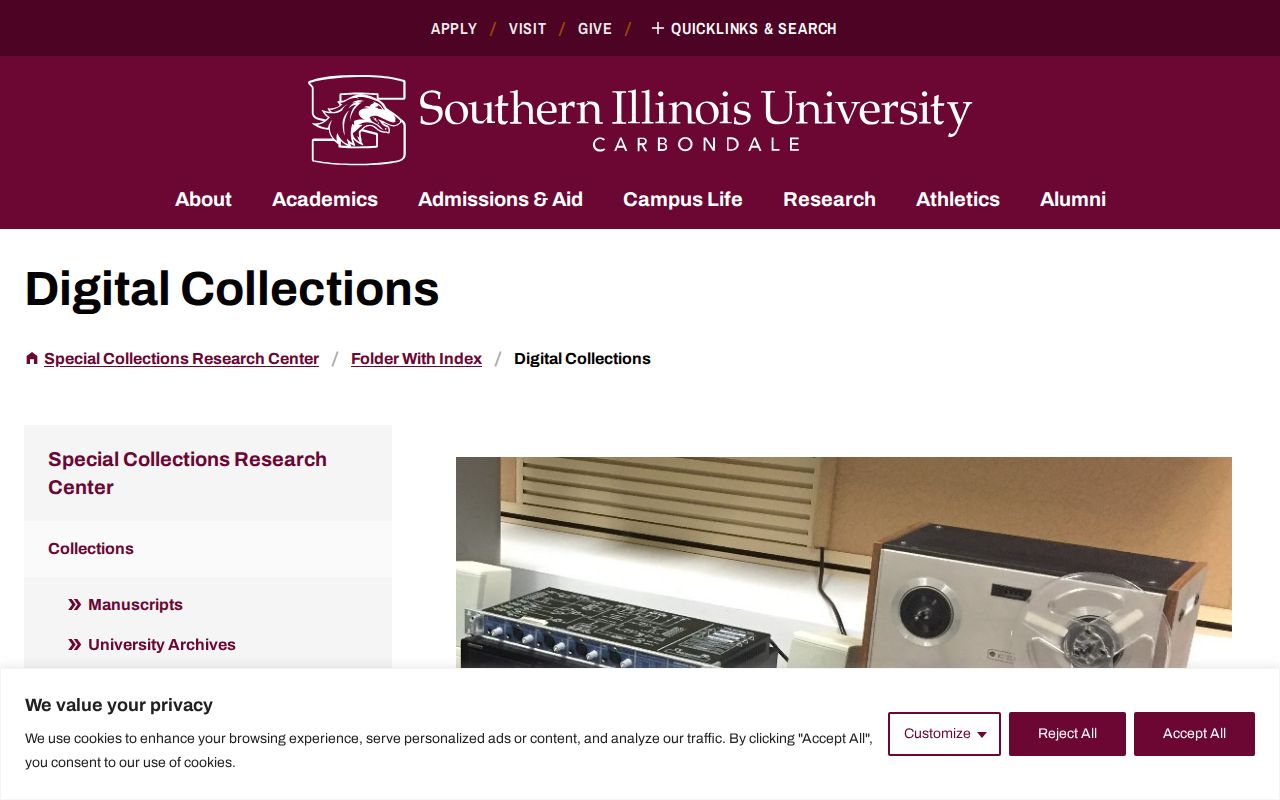
Campus sources must still be read by role and date. A listing may describe a student or employee rather than a citywide resident.
Connect Carbondale Past Households
Owners are only one part of an address history. A directory may name a householder, subscriber, business, or boarder, while census schedules and newspapers can show a household at another date. Use the collections without assuming they were compiled on the same day. The Carbondale city directory page covers the shelves and how entries read.
- Choose a deed or assessor year that fixes the parcel and titled owner.
- Check the closest directory year by name and, when available, by street.
- Compare a nearby public census year, allowing for changed house numbers.
- Search newspapers and obituary indexes for a move, death, estate, or property notice.
- Confirm an endpoint through probate, vital, cemetery, or another dated record.
Carbondale Public Library provides the Southern Illinoisan Archives from 1993 to today. JCHS adds obituary microfilm and cemetery files. Oakland Cemetery has current computerized records, while Woodlawn is a closed historic cemetery with Civil War and African American history. The City cemetery page explains both settings.
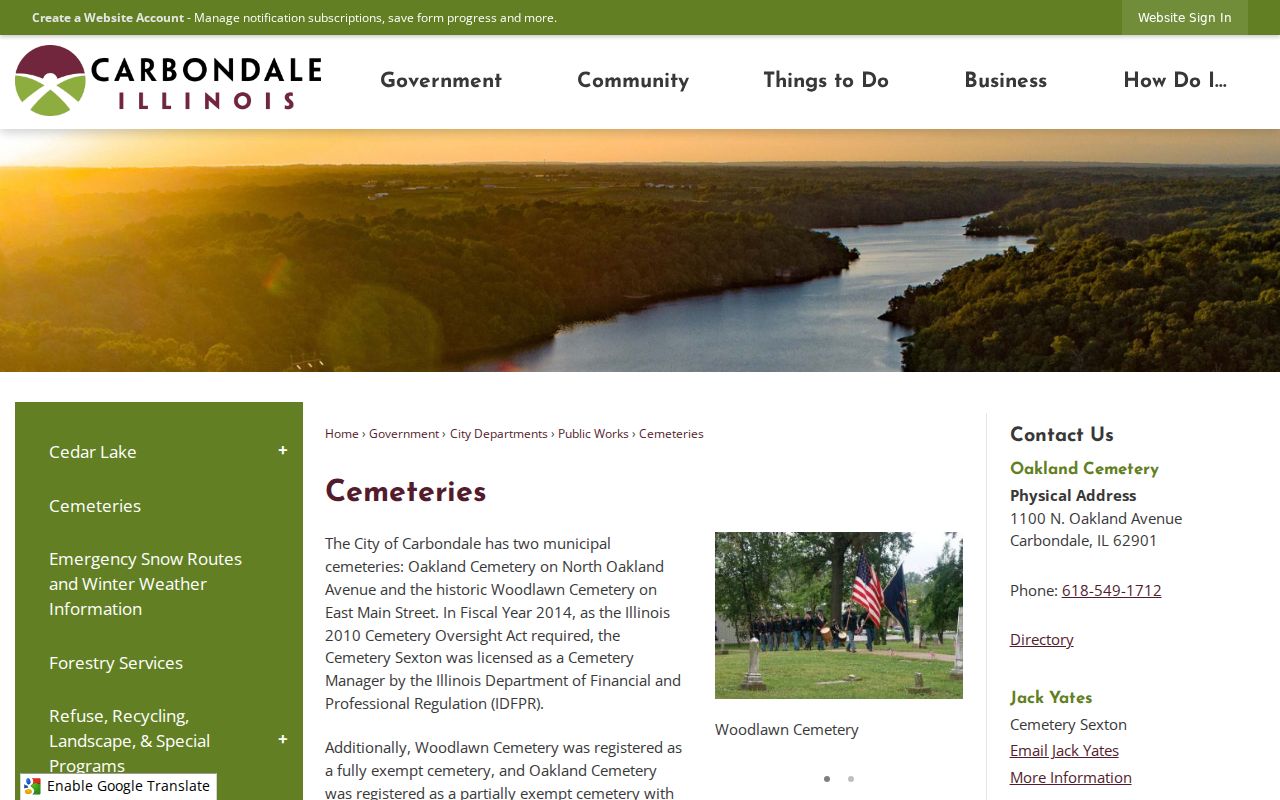
Cemetery evidence can close a family trail, but it does not by itself prove that someone occupied the researched house.
Lawful use. Research previous residents for house history, genealogy, heirs, or personal curiosity. Never use an old or current address to track, harass, or harm a living person.