
Carbondale Directory Collections
Two early year points are firmly documented, while the full shelf run remains unposted. John W. D. Wright's 1977 history includes an appendix titled “Residents of Carbondale in 1896, As Shown in the City Directory” on page 335. An Illinois historic recordation and authoritative bibliography also cite a 1905 Carbondale City Directory. Neither source proves that every year between those dates survives. The Jackson County Historical Society, Carbondale Public Library, and SIU Special Collections hold overlapping material, but none publishes a complete year-by-year directory catalog online.
| Collection | Years | Where Held | Access |
|---|---|---|---|
| Wright history appendix | 1896 | JCHS and SIU-area collections | Book or reference request |
| Carbondale city directory | 1905 | Cited in state historic documentation | Request volume; no public scan found |
| City and telephone directories | Multiple years; exact run unposted | Jackson County Historical Society | Reading room or records request |
| SIU directories and catalogs | Catalogs 1874-1917; bulletins from 1907 | SIU Special Collections | Online discovery and Morris Library |
| Southern Illinoisan Archives | 1993 to today | Carbondale Public Library | Full-text database |
No confirmed reverse-directory year, publisher list, final printed year, or public sample entry was found. Ask for a particular year and street instead of assuming a continuous run. Telephone books list subscribers, not every resident. SIU directories describe an institution, not the whole city.
Carbondale's 1896 Directory Trail
The 1896 appendix is an unusual doorway into early Carbondale. It is a transcription inside a later town history, not the original volume. The appendix can identify a name and directory address worth pursuing, but spelling, abbreviations, omissions, and editorial choices should be checked against the underlying city directory when JCHS or SIU can locate it.
The 1905 reference supplies a second fixed point. State historic documentation used that directory while discussing early Carbondale College and Southern Illinois College views. A careful citation records the year, title, page, repository, and whether the evidence came from the original book or a later quotation. The publisher and scan remain unknown, so filling them in from another city's directory would create a false Carbondale record.
Evidence key. A confirmed year proves that source existed; it does not prove a complete annual Carbondale directory run.
Carbondale Directory Reading Rooms
Jackson County Historical Society's library is the natural first call for city and telephone directories, yearbooks, newspapers, family notebooks, plat books, and Sanborn maps. The reading room is at 1616 Edith Street in Murphysboro, with public pages listing Wednesday and Friday, noon to 3 p.m., and 618-684-6989. Give staff a surname, approximate year, street, and the type of copy needed. Confirm the schedule before traveling.
Carbondale Public Library genealogy resources pair the Southern Illinoisan archive with database access and reference help at 405 West Main Street. Its posted hours are Monday through Thursday 9 a.m. to 8 p.m., Friday and Saturday 9 a.m. to 6 p.m., and Sunday 1 to 6 p.m. Staff can scan a located page to email. This route is strongest when a city directory lead needs an obituary, announcement, or news item.
The Carbondale City Clerk is custodian of municipal permanent records.
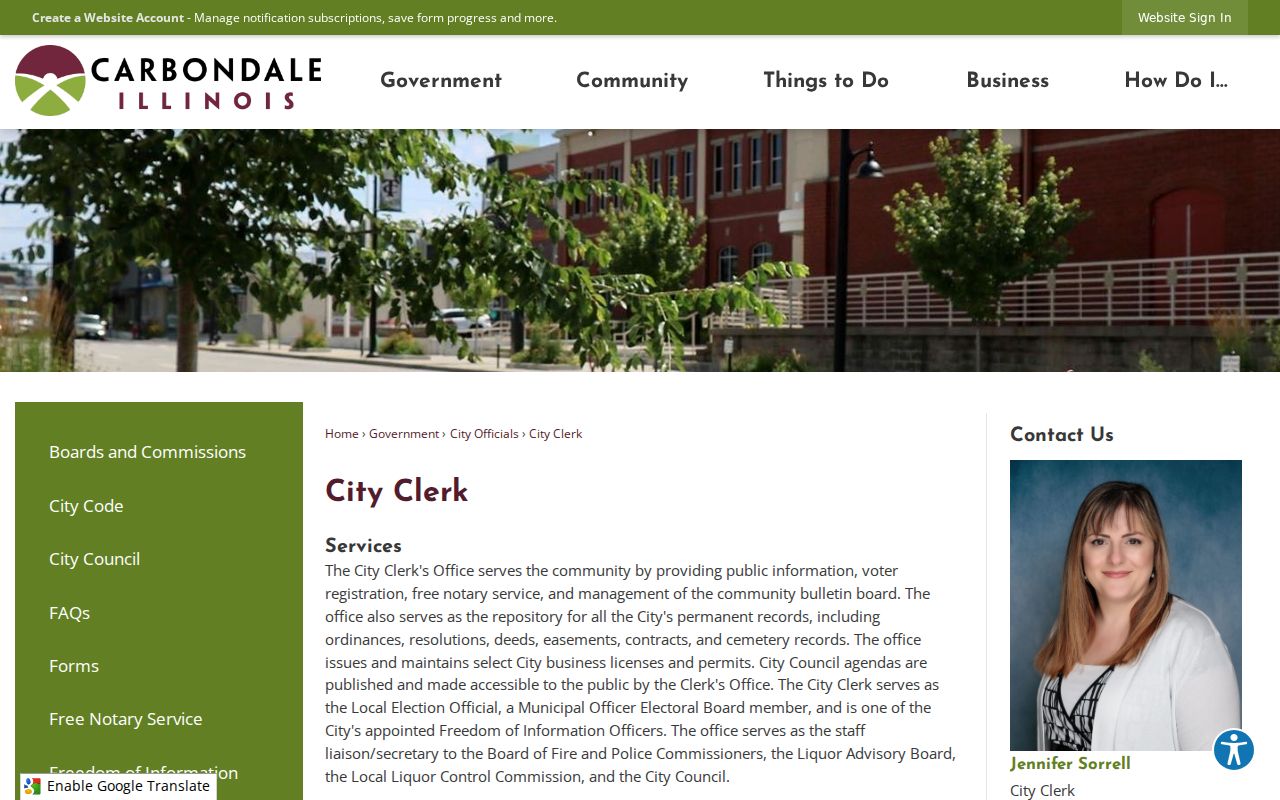
City records can help explain an address, license, cemetery entry, or municipal action found beside a historical name.
SIU Carbondale Name Collections
SIU Special Collections' digital collections include university directories, catalogs, yearbooks, newspapers, maps, oral histories, and photographs. Annual catalogs cover 1874-1917, bulletins and catalogs begin in 1907, and University Archives covers SIU records from 1874 forward. ArchivEra helps locate material that has not been digitized. These collections are excellent for a student, professor, employee, or campus institution, but an SIU listing cannot stand in for a citywide resident roll.
A June 2026 collection update described continuing digitization. That makes the portal worth checking again, yet it does not mean every Carbondale city directory is online. The Special Collections Research Center is on the first floor of Morris Library, Room 134, at 605 Agriculture Drive. Reference staff may be reached at 618-453-2516 or speccoll@lib.siu.edu.
Municipal records reached through the Carbondale Citizen Portal can add a modern administrative date to an archival address.
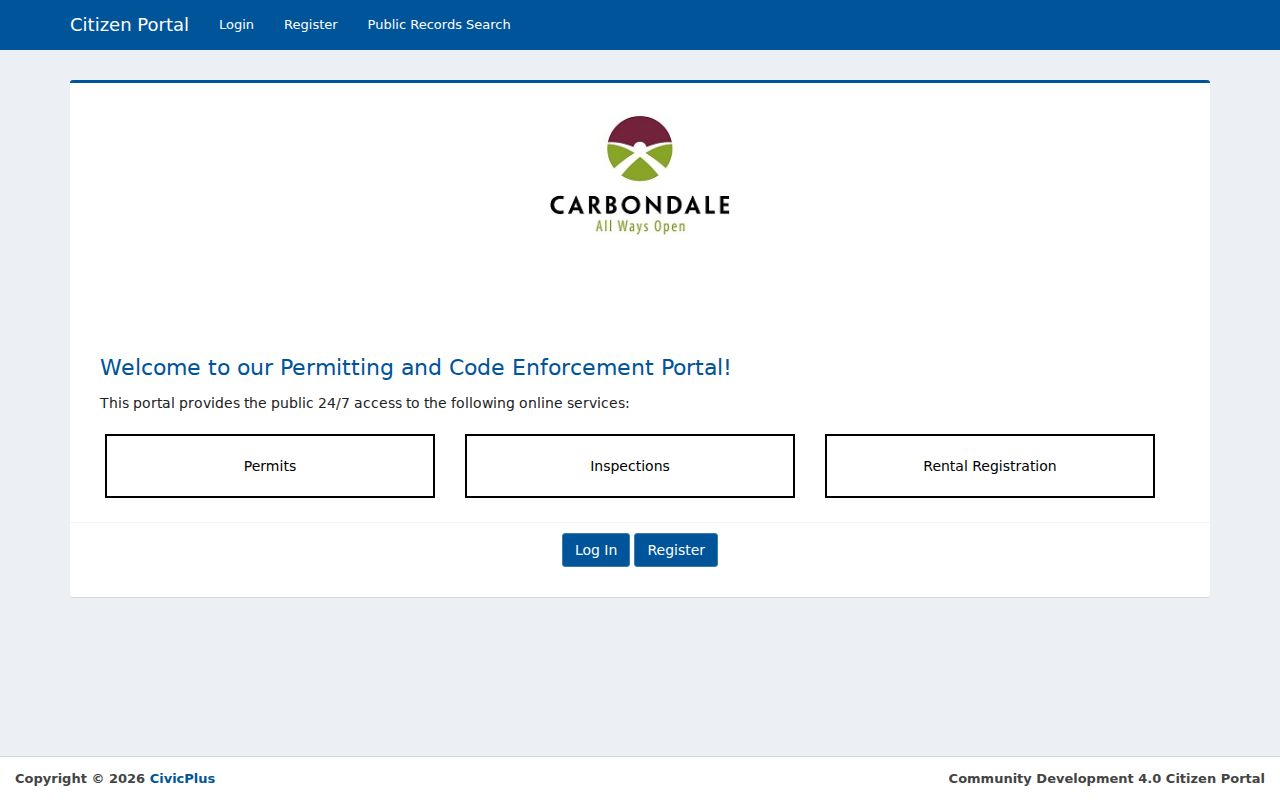
The portal is a companion source, not a replacement for a printed directory or archive request.
Reading Carbondale Directory Entries
No official online sample was captured, so a made-up resident entry would be misleading. When an archivist supplies a page, photograph the title page, abbreviation key, printed page number, and nearby entries. Then transcribe marks exactly. Initials may hide a first name, and a spouse may appear only in parentheses. “r” may mean residence, while “bds” commonly signals boarding, but the volume's own key controls the meaning.
| Identity line | Name, initials, spouse notation, or household role as printed |
|---|---|
| Work line | Occupation, employer, business, or institutional tie if present |
| Place line | House number, street, room, boarding, or route notation |
| Contact line | Telephone number in later subscriber directories |
| Source line | Directory title, publisher, year, page, and section |
- Criss-cross directory
- A street-order or telephone-order list used to move from an address to a listed name. No specific Carbondale reverse volume was confirmed.
- Householder index
- A list centered on the person identified as heading a household, which can omit or shorten other residents.
- Abbreviation key
- The publisher's legend for symbols and shortened words. Save it before interpreting an entry.
Carbondale Newspapers Fill Gaps
The Southern Illinoisan Archives covers 1993 to today and is updated daily. Searches can surface people, obituaries, announcements, events, and notices. Library-only Ancestry Library Edition, African American Heritage, and Newspapers.com Illinois broaden the route, while HeritageQuest is available remotely with a library card. A newspaper item supplies context that a one-line directory cannot, but it still needs a date and page citation.
A practical chain is directory name and address, then newspaper mention, then cemetery or eligible vital record. Carbondale cemetery records distinguish active Oakland Cemetery records from historic Woodlawn. Ask for a named interment or lot rather than an open-ended people list.
The city's staff directory illustrates a narrow modern directory maintained for public contacts.
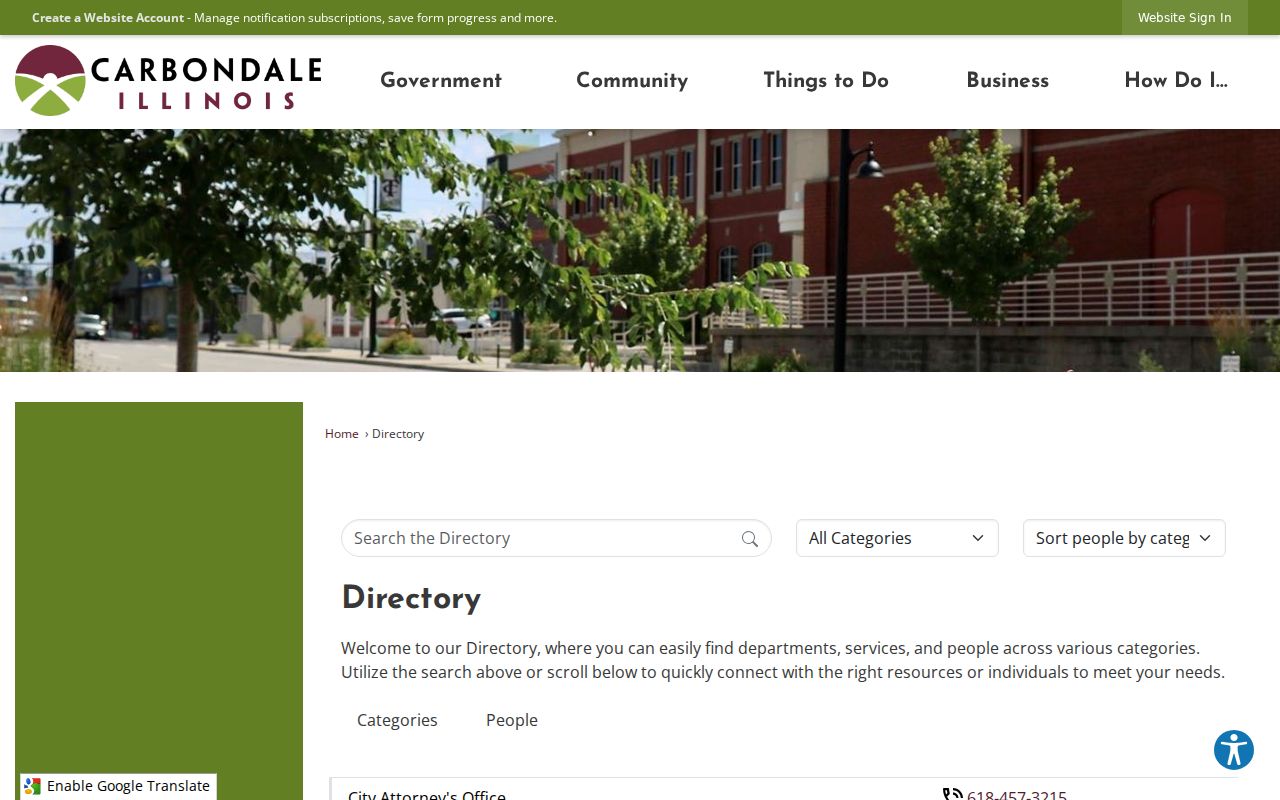
It should never be treated as a list of Carbondale residents, since it identifies public staff roles rather than households.
Map Carbondale Directory Addresses
Historical addresses can shift beneath a stable-looking street name. Carbondale began with a town plat in 1852, grew after the first railroad train in 1854, and later adopted code books and official maps. Sanborn editions from 1886, 1893, 1899, 1906, 1913, and 1929 show blocks, lots, building footprints, and uses. They do not name ordinary residents. Used beside the 1896 appendix or 1905 directory, they test whether the street and building existed in the right form.
| Year | Carbondale record clue |
|---|---|
| 1852 | Town plat establishes the first lot and street frame |
| 1874 | SIU begins an institutional record stream; a city code book survives |
| 1886-1929 | Sanborn maps track block and building change |
| 1896 | Known appendix preserves an early directory snapshot |
| 1905 | Documented directory and city code reference |
Keep the lot, block, subdivision, or deed reference alongside the street address. Legal descriptions often survive a renumbering or annexation better than the house number.
Request Carbondale Directory Evidence
When no scan exists, the fallback is a precise reference request. Give the repository spelling variants, year range, street, and desired source. JCHS accepts reading-room questions and a records-order form. SIU accepts reference requests by phone or email. The library offers help during open hours. IRAD at SIU can guide researchers to county series.
Municipal documents can be requested through the Carbondale records request form when a defined, non-exempt city record is relevant.
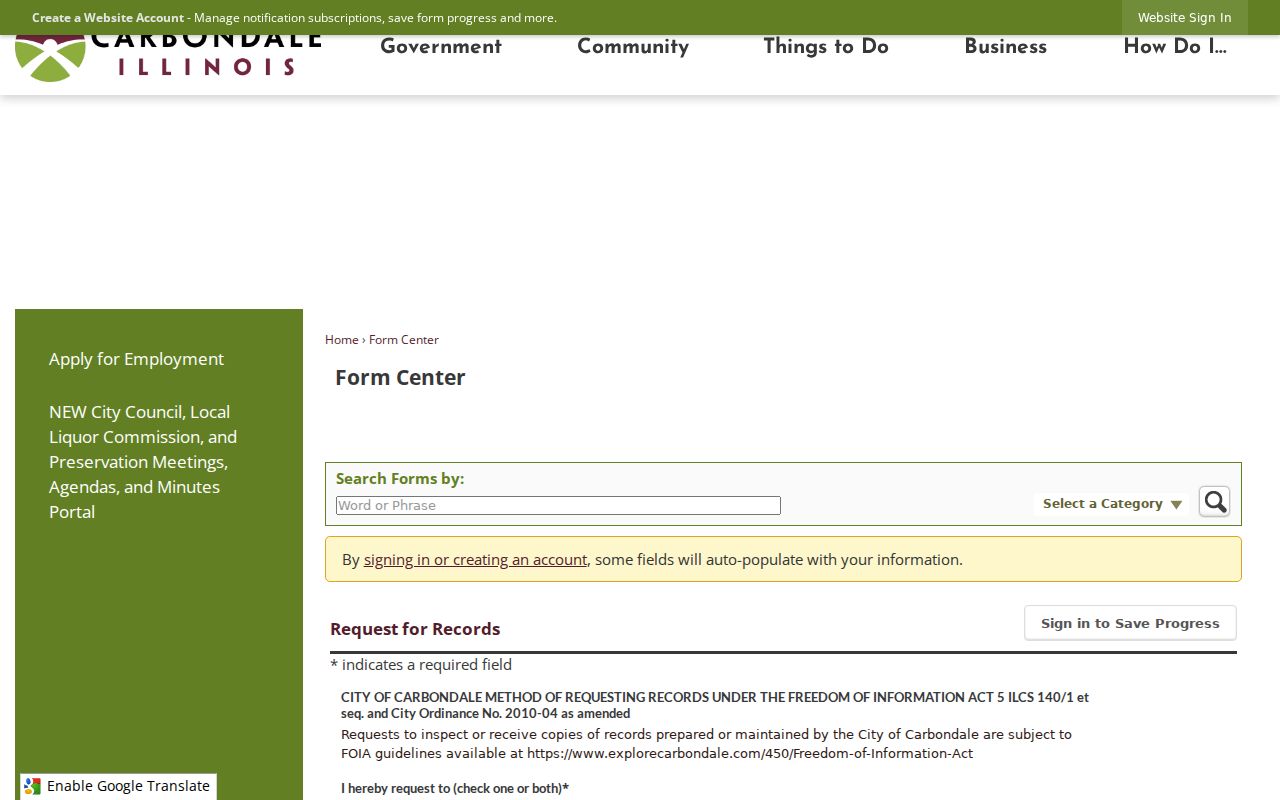
The form asks whether the requester wants inspection or copies, a description, format, and contact details. It is not an archive catalog.
Building history may also lead to Carbondale building permit records.
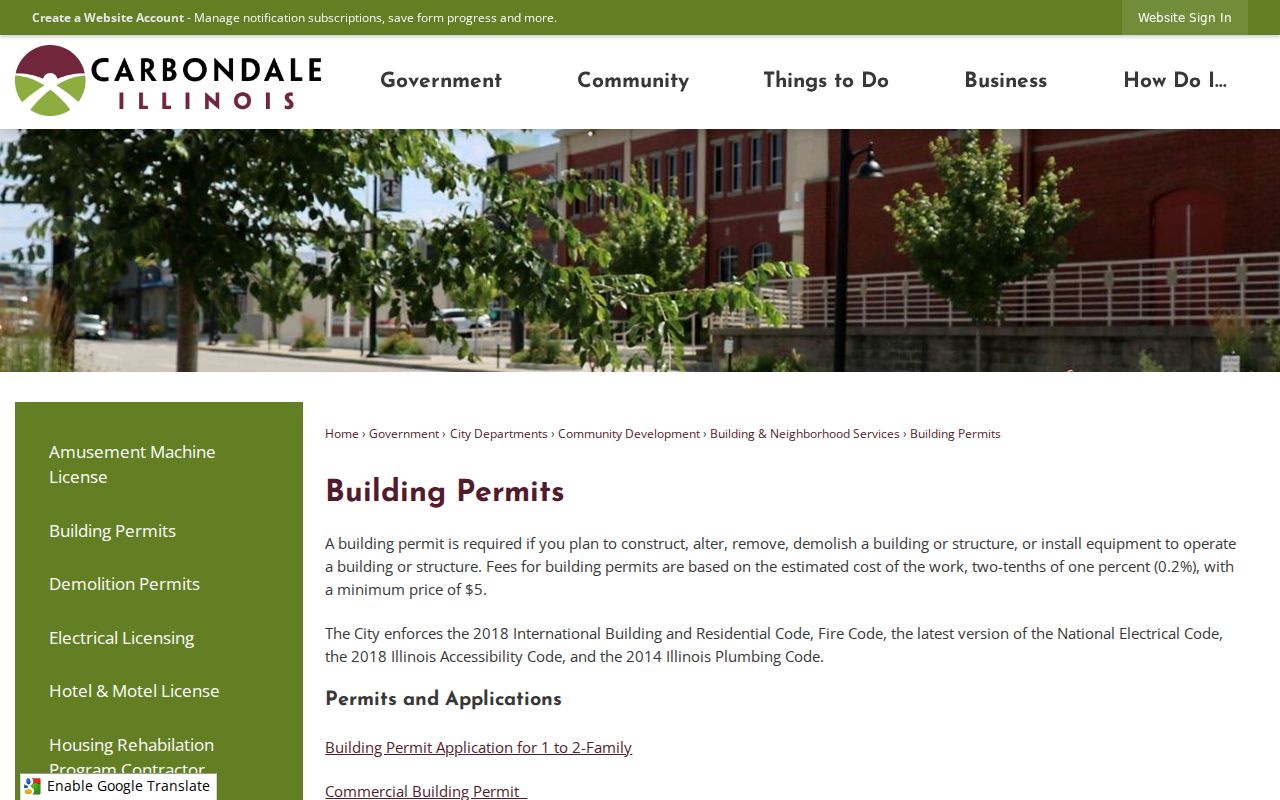
A permit can date work at an address, but it does not prove that a named owner or applicant lived there.
Trace Families in Carbondale Directories
A sound family-history search treats each listing as a time-stamped clue. Start near a known event, then move backward and forward. The census can bridge decade points, while newspapers, deeds, cemetery files, and vital records test whether the same name belongs to the same person. Never treat a missing year as proof that someone left Carbondale.
- Choose a directory year close to a known birth, marriage, school term, job, or death.
- Search the surname, initials, spouse, institution, and likely business spelling. Record the page and marks exactly.
- Check adjacent directory or telephone-book years, noting changes without assuming why they occurred.
- Pair the listing with a census, deed, newspaper, yearbook, cemetery file, or eligible vital record.
- Resolve the old street against plats, Sanborn maps, city codes, and modern GIS.
A disappearance may mean death, a move, a missed canvass, a new household heading, or an unlisted telephone. With no second source, record only that the name was absent from the checked edition.