
Find Carbondale Residents by Record
A useful Carbondale residents directory search starts with the kind of fact already known. An address points first to the county property roll and GIS parcel map. A full name may fit the recorder, court party index, city staff directory, or a controlled voter-registration match. An old address belongs in city directories, deeds, newspapers, cemetery files, and maps. Each source records a role, not a full life. An owner may live elsewhere, a voter check returns only a controlled match, and a permit can name an applicant who never occupied the site.
Build confidence through agreement. Match the same person across two independent records, then compare dates, middle initials, parcel numbers, case numbers, or a legal description. For common names, location and time matter more than a bare name hit. If the search concerns a historic household, preserve the street spelling and lot or block description because Carbondale boundaries and street labels changed over time.
- Search the Jackson County Property Tax Inquiry by owner, parcel, or site address.
- Open the county GIS record and separate the parcel’s physical address from the owner or mail-to address.
- Check the free land-record index for deeds recorded since 1989.
- Use a second official or archival source that covers the same name, address, and period.
- Ask the proper custodian for a defined record when the needed item is not online.
That sequence keeps the residents directory tied to evidence. It also shows where uncertainty remains instead of turning a partial match into a claim about a Carbondale resident.
Carbondale Resident Records Keepers
Carbondale is not the Jackson County seat. Core county files sit in Murphysboro, while major archive holdings are at SIU in Carbondale. The split matters when an online residents directory trail reaches a public terminal, certified copy, old deed book, or court file. City Hall keeps municipal records. The county assessor links owners to parcels, the Clerk and Recorder indexes land filings and manages elections, and the Circuit Clerk controls trial-court files.
Jackson County Clerk and Recorder
1001 Walnut Street
Murphysboro, IL 62966
618-687-7360
Jackson County Assessment Office
900 Walnut Street
Murphysboro, IL 62966
618-687-7220
Jackson County Circuit Clerk
1001 Walnut Street
Murphysboro, IL 62966
618-687-7300
Carbondale City Clerk
200 South Illinois Avenue
Carbondale, IL 62901
618-549-5302
The county’s records overview is pictured in the official Jackson County records directory.
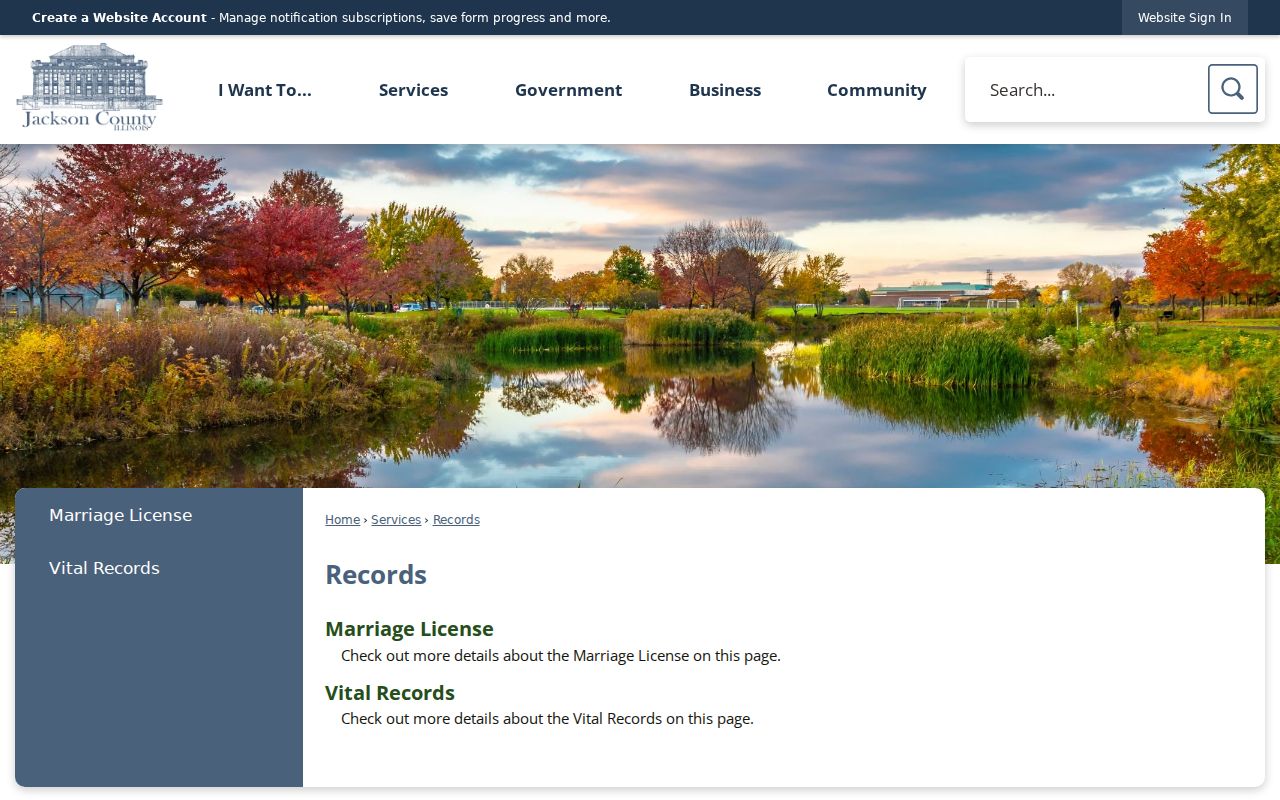
Use that directory to identify the actual office before calling or writing. Staff can help with access, but the Recorder says searchers must conduct their own property research.
Search Carbondale Parcels Precisely
Jackson County’s wEdge portal contains more than 31,000 ownership, address, exemption, sale, and related assessment records. Its owner field finds the name on the assessment. That is useful directory evidence, but it is not an occupancy roll. The site-address controls can narrow a Carbondale street, while parcel, sale, township, district, class, exemption, and legal-description controls support a more exact search.
The live property form appears in the Jackson County Property Tax Inquiry.
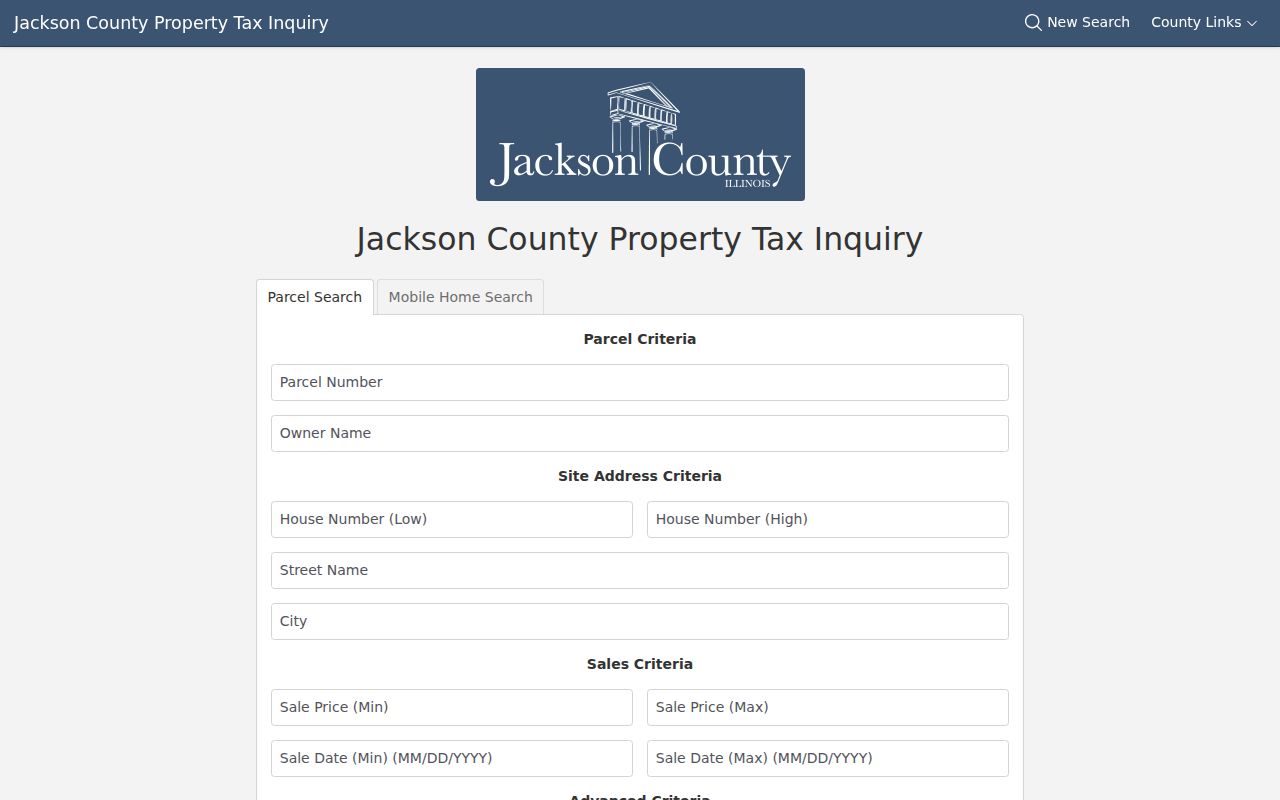
Read the result as a dated assessment record. A sale date is not always a move date, and an exemption or tax class describes the parcel’s assessment, not every person at the address.
| Search field | Input | How it narrows Carbondale |
|---|---|---|
| Parcel Number | Text | Targets one tax parcel |
| Owner Name | Text | Finds the assessed owner |
| Site Address | House range, street, city | Builds an address or block search |
| Sales | Price and date ranges | Filters recorded assessment sales |
| Local categories | Township, district, class, exemption | Includes Carbondale township and city districts |
| Legal Description | Text | Connects lots and subdivisions |
Carbondale Addresses Need Context
The county GIS exposes separate fields for full address, site address, owner address, and mail-to address. A sample Carbondale parcel had a local situs location and a different owner mailing location. Situs means the physical place being taxed. The mail-to field is where the bill goes. Neither field alone proves who sleeps at the address. A parcel also carries a PIN, legal description, acreage, tax code, municipality, school district, class, values, and possible last-sale data.
- Parcel
- A tract tracked for assessment under a property identification number.
- Index
- A finding aid that points to a document; it is not the full document image.
- Roll
- A list made for one official purpose, such as assessment or voting.
- Criss-cross directory
- A directory arranged by street address instead of only by surname.
Keep the fields separate. A tax mailing address, property owner, registered voter, and current occupant can be four different things.
Current Carbondale Directory Sources
No current Carbondale residents directory is a complete city roll. Instead, public systems list people in defined roles. The assessment roll lists owners. The recorder index lists parties to land documents. The voter tool checks a registration using several personal fields. The city staff search lists public officials and department contacts. Court records identify parties to public cases, subject to sealed, juvenile, expunged, and other limits.
| Carbondale source | Person or role shown | Keeper | Public route |
|---|---|---|---|
| Property assessment roll | Owner tied to a parcel | Jackson County Assessment Office | Free wEdge and GIS portals |
| Land-record index | Grantor, grantee, or filing party | Jackson County Clerk and Recorder | Free basic index from 1989; paid images |
| Registration lookup | Controlled voter match | Illinois election authorities | Required-field online check |
| Court party search | Named party and case data | Jackson County Circuit Clerk | Judici entry and clerk files |
| City staff directory | Officials and department contacts | City of Carbondale | Category, first-name, and last-name search |
The Clerk and Recorder’s official page shows the land-index and election routes.
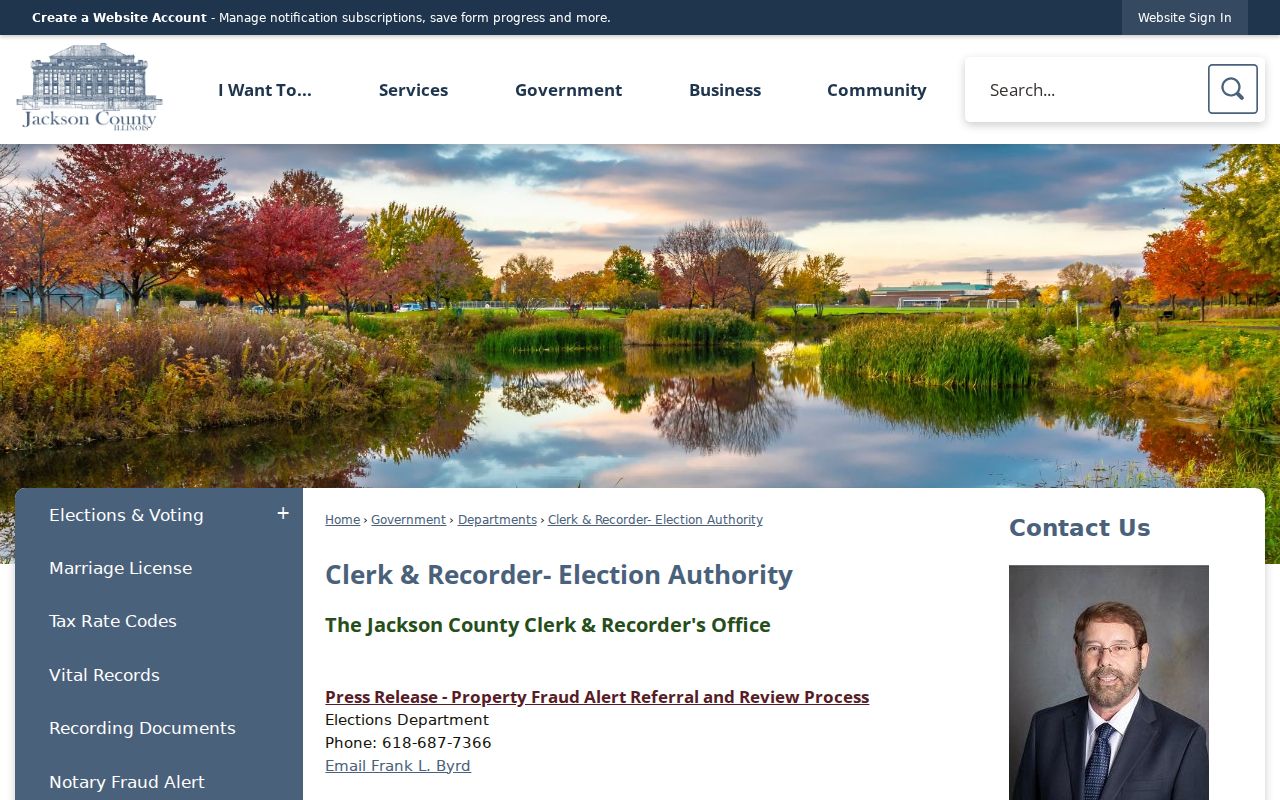
Choose the row that matches the question. A person-specific workflow is developed further in the Carbondale resident lookup.
Verify Carbondale Court Matches
Carbondale ordinance and traffic matters use the First Judicial Circuit in Murphysboro. The county directs public searches to Judici, while the Circuit Clerk holds the trial-court dockets and files. During research, the web search placed a CAPTCHA in front of the case fields. Treat that as an access limit, not proof that no case exists. Call or visit the clerk for a defined case, copy, or file question.
The Jackson County Judici entry shows the online gateway and its limitations.
A docket is the court’s event list for a case. Check the case number, party role, filing date, charge or claim, hearing entries, and disposition. The clerk’s file controls when the summary and underlying record differ.
Request Carbondale Records Narrowly
Illinois FOIA, 5 ILCS 140, opens non-exempt public records held by city and county bodies. A noncommercial request ordinarily receives a response within five business days, subject to statutory extensions. The first 50 black-and-white letter or legal pages are free, then pages generally cost up to $0.15 each. Electronic and unusual formats follow separate cost rules. FOIA cannot override vital-record eligibility, sealed-case rules, voter limits, or another confidentiality law.
The City Clerk accepts online, email, fax, mail, and in-person requests. Describe the record type, name or address, date range, department, format, and whether inspection or copies are wanted. Carbondale also notes that a public body need not duplicate a record already reasonably available online.
The city’s public-record instructions show the local request route.
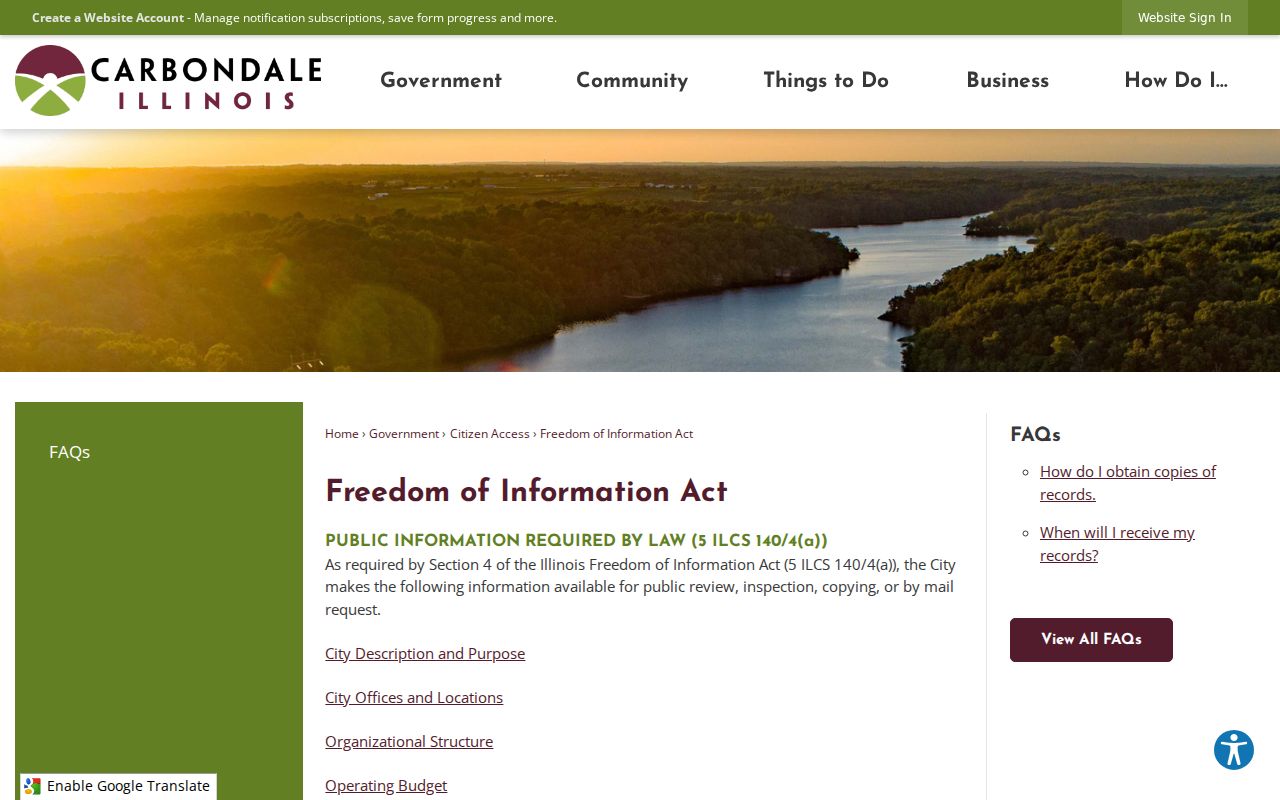
Ask for a record, not an undefined search for a resident. That gives the FOIA officer a clear custodian, subject, and time span to review.
Carbondale Vital Records Have Gates
The Jackson County Clerk issues eligible copies of county births, deaths, and qualifying marriages. Illinois law restricts birth access by identity and relationship. A genealogical purpose can qualify for births at least 75 years old and deaths at least 20 years old under the Vital Records Act, while archive inspection thresholds differ. Marriage certificates come from the county where the license was issued. Divorce records come from the Circuit Clerk where the case was granted.
The Jackson County vital-record page sets out identification, eligibility, ordering, and copy rules.
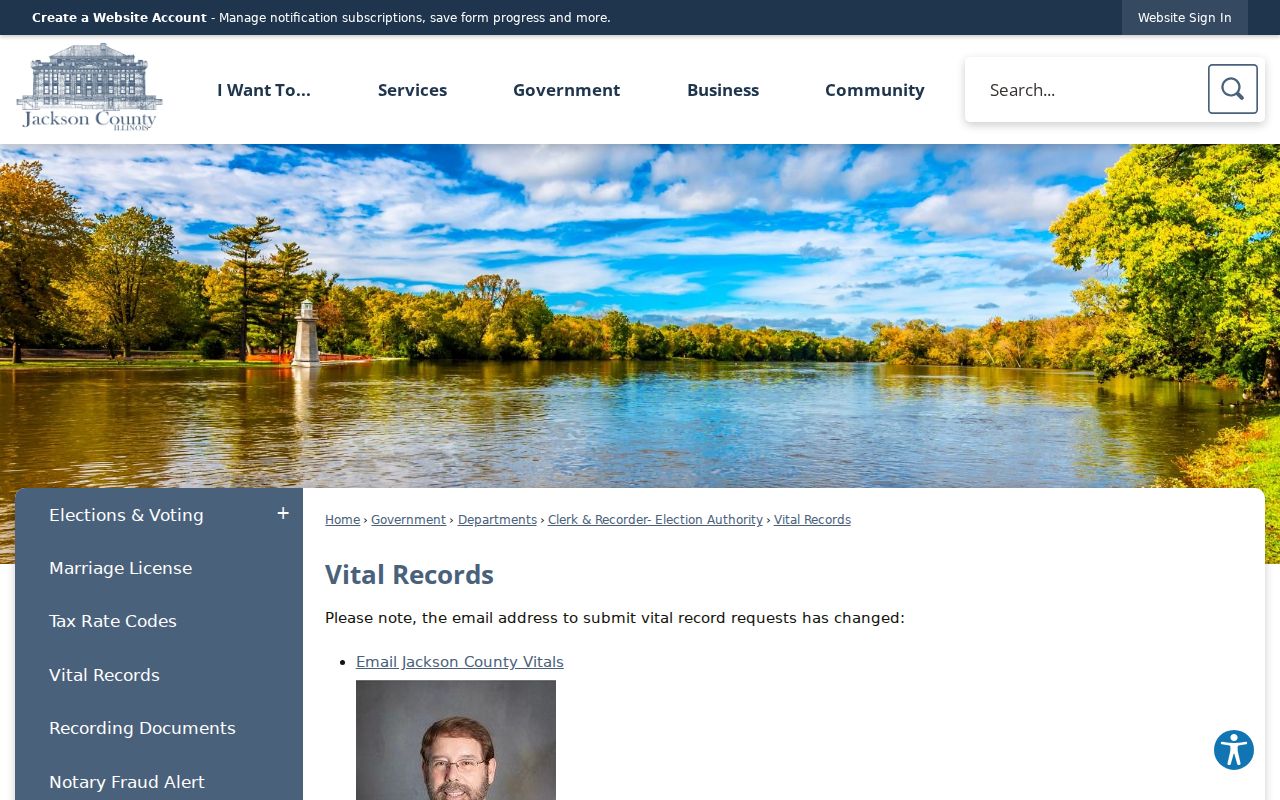
Use a directory or index to identify the likely event first. Then follow the custodian’s current form and proof rules. A public-record request does not turn a restricted certificate into an open residents directory entry.
Trace Historical Carbondale Directories
Older Carbondale residents appear across city and telephone directories, county books, newspapers, yearbooks, church material, deeds, cemetery files, and maps. Jackson County Historical Society holds city and telephone directories, yearbooks, newspapers, plats, Sanborn maps, courthouse material, cemetery indexes, and family files. SIU Special Collections houses local publications and IRAD records. Carbondale Public Library adds a full-text Southern Illinoisan archive from 1993 forward and other genealogy databases.
The Carbondale Public Library genealogy collection is one local starting point.
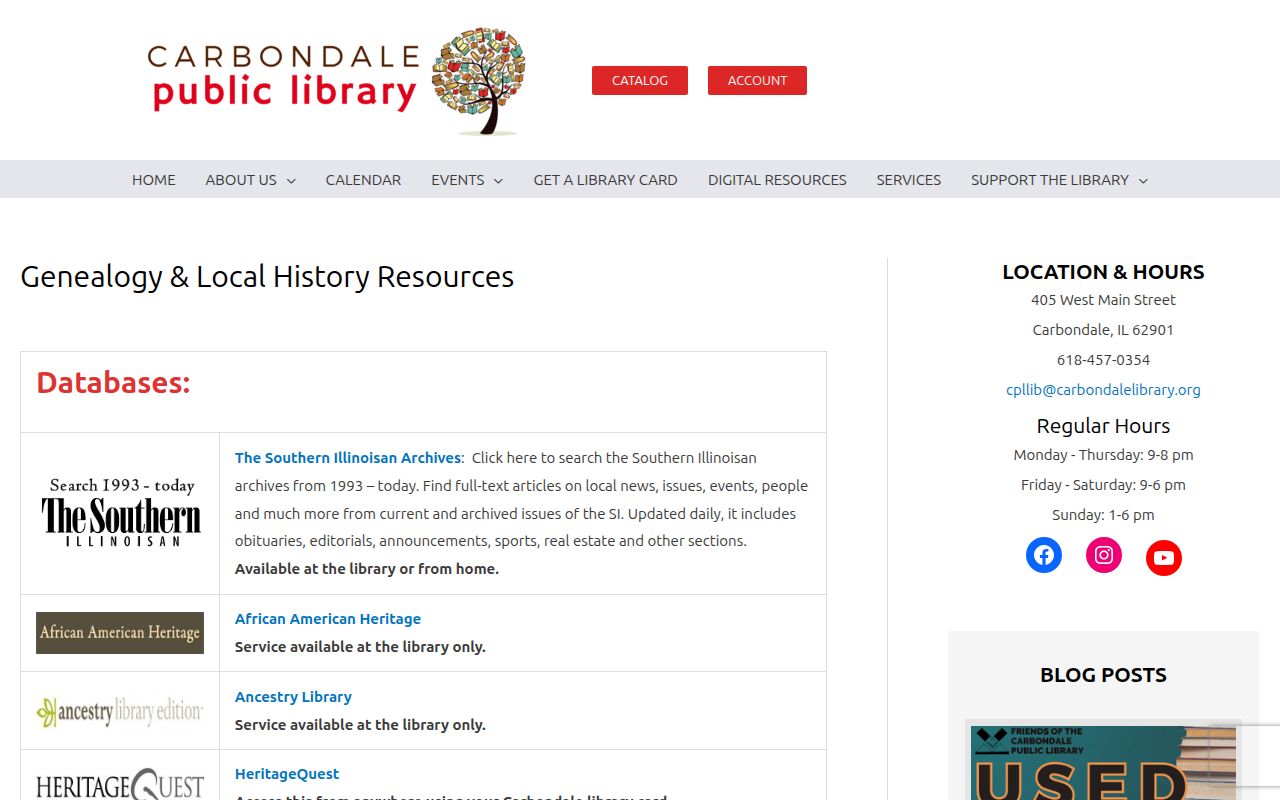
A directory entry may show a householder, spouse, occupation, employer, and street address, with abbreviations explained near the front of the volume. Search nearby years because directories were compiled before publication and may miss a short stay. The full shelf and reading method appear on the Carbondale city directory page.
Bridge Carbondale’s Deed Gap
The free Fidlar land index starts in 1989. IRAD lists a Jackson County deed index for 1838 through 1889 and deed records for 1843 through 1936. Those ranges leave a middle period that cannot be solved from the inspected online tools. The documents did not vanish. They require courthouse books, recorder help with access, SIU and IRAD catalogs, or local historical collections.
At the recorder’s public computers, searchers perform their own work. Tapestry offers deeper searching and document images for a fee. If a document number or book and page are known, the county accepts a prepaid copy request by mail or in person. A known-document copy is $1 per page on the researched county schedule. Verify the live fee before ordering.
Missing online is not missing from the archive. Preserve every book, page, instrument number, and legal description before moving to another index.
Use the Carbondale Archive Circuit
Carbondale’s research geography is unusual. Deed and court counters are in Murphysboro, but SIU’s Special Collections Research Center and the IRAD depository are in Morris Library in Carbondale. Jackson County Historical Society adds local family files, obituaries, cemetery material, directories, and record orders. The public library contributes newspaper and genealogy access. A long search may move between all four instead of staying in one database.
The SIU Special Collections Research Center describes its archival services and collections.
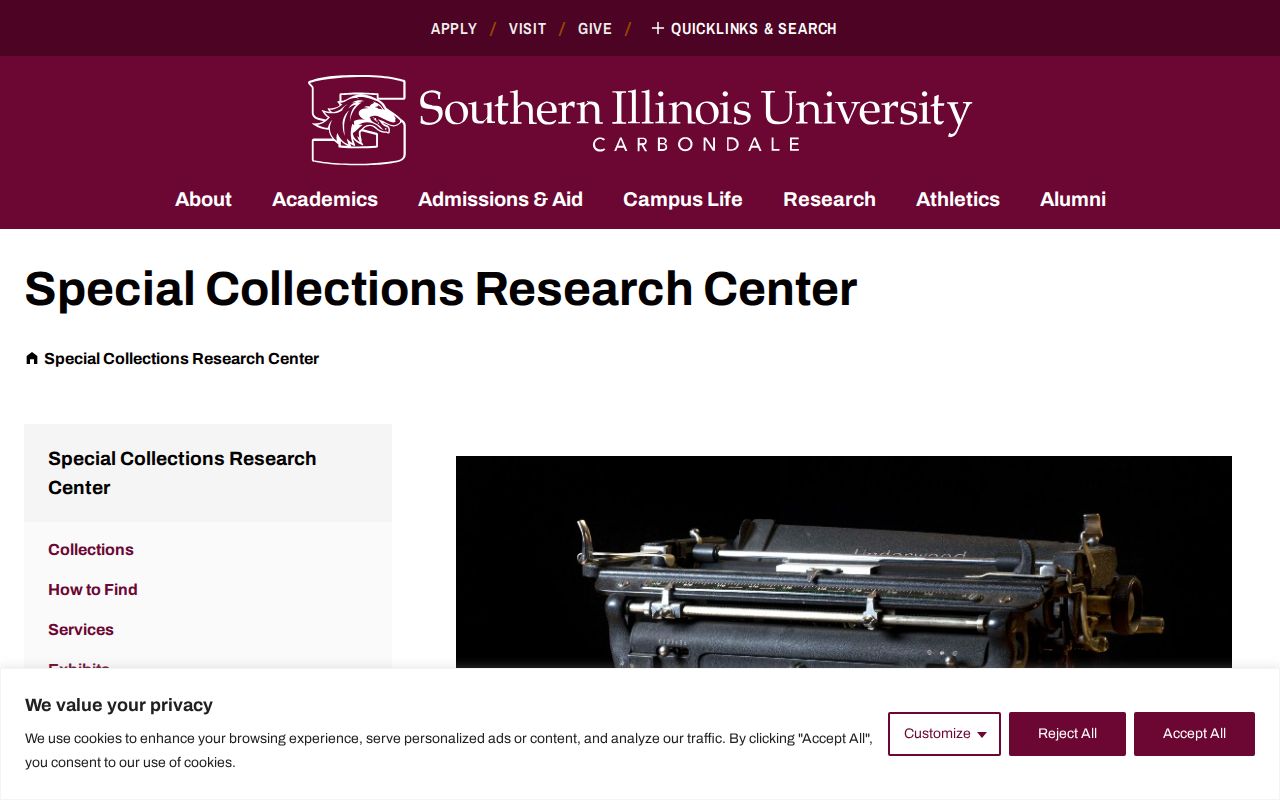
SIU’s 2026 digital-collections update lists continued work on directories, catalogs, newspapers, yearbooks, maps, oral histories, and photographs. Digitization expands access, but it does not mean every volume or county series is online.
Read Carbondale’s Local Record Layers
Carbondale began with an 1852 town plat, followed by the railroad in 1854. City code books from 1874, 1905, and 1929 show how municipal rules and mapped limits developed. The 1929 official map and later annexations explain why an old lot, block, ward, or road description may not match a current house number. Sanborn editions from 1886, 1893, 1899, 1906, 1913, and 1929 can show buildings, alleys, and street patterns, though they do not name ordinary residents.
Woodlawn and Oakland cemeteries add two different people records. Oakland has active city administration and computerized records. Woodlawn is a closed historic cemetery with Civil War and formerly enslaved people context. For either one, request a specific interment, lot, deed, or sexton record, then compare the finding with an obituary, directory year, or county file.
The City’s Carbondale cemetery record overview documents both municipal sources. Use lawful, personal research only. Never use a Carbondale residents directory trail to stalk, harass, threaten, or harm a person. Illinois also offers an Address Confidentiality Program for eligible survivors, and protected addresses should not be pursued or republished.